Tuesday, June 25, 2013

Basic Facts and Tips for Shop Owners on Etsy


I got this great info from some friends on Etsy that was gathered from the blog referenced below. Its a good starting point for understanding Etsy and how to be found!

**** Basic Facts and Tips for Shop Owners on Etsy ****

First general terms and definitions:

a. Key Words: words/phrases specific to an item that help define exactly what that item is.

b. Google: this term is sometimes use d to refer to any internet search. It is also a specific search engine made by Google. The company made its name with this search engine. Other search engines are: Yahoo, Bing, Duckduckgo, Mahalo, Ask Jeeves and quite a few others. Google is king, which is why it has become a verb. “Google it”.

For this paper the term "google" will be used as a collective term that will represent all search engines

c. Primary key word phrase: the main phrase/idea/category you choose to optimize your shop/section/listing. d. Secondary key word phrase: a phrase for a secondary area/idea that is chosen for optimization. e. Optimization: "thinking like a customer" meaning select the most likely terms a customer would use to search for your items.

e. Lead sentence/photo: refers to the first sentence/photo

f. Tags: 2-3 word phrases that describe an item.

g. Internal link: a link (URL or web address) in your item description to return the customer either to your shop, another related item in your shop or a section of your shop. The purpose is to keep your customer in your shop as long as possible. URL stands for Uniform Resource Locator.

h. SEO: acronym for "Search Engine Optimization" or making the info in your shop as optimal as possible so your shop/items can be found on the internet in a search.

i. Relevancy Searching: the method Etsy and Google use to match customer search terms with seller item titles. Relevancy is a 'best match' function. The listing title that 'best matches' the search terms used will be ranked highest on the list of search returns. The ultimate goal of title creation is to match 'exactly' the same words in the same order that is entered into the search box by a customer.

For example search term entered is "Baby Girl Hair Bows". Any item title that matches that term exactly (both words used and word order) will be listed ahead of any item title that contains the same words but in different locations or word order, i.e. "Girl Hair Bows, Baby Hair clips".

j. Search algorithm: code written by Etsy/Google techs. This coding defines the criteria used to determine what, and in what order to select items for search results. (Very simplified explanation, but you get the idea).

***********
***********

Who uses what:

1. Shop Title: used by Google- Designed for a brief key word rich description of what is sold in your shop. important to google ranking and SEO. Should remain relatively static once desired terms are chosen. Changing frequently breaks established links and indexing.

2. Shop Announcement: used by Google- Like shop title, however, first paragraph is most important. First sentence should duplicate shop title. Second and third sentences should provide information about owner (training, shop philosophy and sources of inspiration). Important to google rankings and SEO. Just as with your shop title, the information in this first paragraph should remain relatively static as change breaks the established links and associated indexing.

3. Section Titles: used by Google- like the shop title, designed to contain key word rich phrases that specifically describe the items within each section. Each section title provides a 'landing page' or 'doorway' into your shop. 10 sections provided and all should be used if possible. Better to have too many than too few. Again, frequent changes are not recommended unless absolutely necessary.

4. Feature Items: used by Etsy and possibly by Google as the title (meta-tag) for each photo is searchable. This area located directly beneath your shop announcement is designed to contain photos of 4 items you which to “feature” or promote. Some people use them to show case their new listings, others use them to showcase a particular segment of their shop they are promoting. At any rate they should be used and only the best product photos should be chosen.

5. Item titles: Used by Etsy primarily and Google to a lesser degree. The first 3-5 words important to Etsy, entire title is 'read' by Google. Traditional thinking says first 3 words are most important. We suggest key words in up to the first 3-5 positions. Construct your titles using a primary and secondary key word phrase, with additional descriptive or 'filtering' terms at the end.

Words such as 'Free', 'Sale', 'OOAK', 'Unique', should not be used. Creative or Artistic titles should also NOT be used.

Two schools of thought on length of title. Google techs and guidelines state that the first 70 characters are all that are indexed. We recommend keeping titles to 7-10 words. There are some who promote the "long tail" theory of title construction which advocates "key word stuffing", filling up all the space allowed with various keywords in an unstructured manner. The evidence for this theory is anecdotal and has been debunked by google guidelines and techs. Repeating words in your title is OK if you only use the same word twice in the same title.

6. Item Description: Used by Google primarily and Etsy to a lesser degree. The first sentence is important to Etsy, entire description is scanned by Google for key word phrases which it uses to index item/shop. Powerful and important for Google ranking and SEO.

Lead sentence should contain a key word phrase similar to but not identical to your item title. I recommend placing your shop name in the lead sentence.

Body of description should contain absolutely all the essential information about your item. Do not assume your customer knows what you mean. They do not. Providing too much info is much better than providing too little. Describe your item as if you were talking to a blind person. Use terms that pertain to texture, quality, weight, color, smell, size (all dimensions) and possible uses.

Any measurements should be in both Imperial and Metric terms, word spellings should encompass both US English and UK English. Do NOT put shipping or return information in your listings. Provide an internal link to your policy page instead, if you feel it is necessary. If you provide wholesale pricing or quantity pricing mention that and request that customer contacts you for more information.

Every item description should contain at least one internal link and preferably two. One link should go to the item section, the other link should go to your main shop OR to complimentary items in other sections.
******One important note. It is very tempting to use the 'cut/paste' feature when writing descriptions. This is an absolute NO NO.

Google has, within the last year, gone to great lengths to write into their algorithm a key code that abhors duplication. This means that if they 'crawl' (computer speak for scan) your shop and find the same description over and over again, even with minimal changes, they will totally discount or ignore all listings that contain the description. This also includes any listings that you might have on other e-commerce sites such as Ebay, ArtFire, Zibbet, Weebly, etc.

Always write completely new descriptions for each item.*****

7. Tags: used only by Etsy. For best results, tags should be 2-3 words long as single word tags are not effective with a Relevancy based search algorithm. There are 3 top level tags that are chosen when creating a listing. These are very important as they determine the broad categories that your item will be listed in. They are single word tags that can not be changed initially. You are given a total of 16 tag slots, including the 3 top level tags, use them all. The order of your tags is irrelevant and you can repeat the same word when used in a new tag.

One absolutely essential factor in creating tags is to create tags that duplicate your title as closely as possible. Consistency with your item title, repeating key words in your description and creating matching tags is fundamental in obtaining good Etsy relevancy search results and Google SEO and Ranking.

8. Photos: Excellent photography is essential for capturing your customer's interest and promoting click through to your shop. Your photo is the first contact that customers have with your item and is their first impression of your shop and it's contents.

New to Etsy is a way to adjust the placement of your photo right on the New Listing page. Before you list, during the preview, check the upper right corner for the tool.

The Etsy aesthetic is plain white backgrounds for all items. It keeps the customer's eye and brain focused on the item. That being said, there is no hard and fast rule that states you must use this type of photography.

Whatever 'style' you choose, keep in mind that the main focus should be what you are selling and not any secondary props or background imagery. All your photos should use the same background. This promotes a cohesive look to your shop--Particularly with the 4 feature items since they are 'front and center' by their very nature.

9. Policy Page: used only on Etsy- a very under-utilized feature on Etsy but a very important one. This is where you get to state the rules of your shop. Customers are like children, they like to have rules to live by. Here is where you give your customers rules regarding shipping, returns/refunds, special orders, and payment policy.

Be specific, remember you are the shop owner, make the rules to best suit your situation (within reason of course) These guidelines not only define how you run your shop but also provide protection in the event of a disputed transaction.

If you need help, refer to the Etsy handbook, other sellers, or Pat's shop for examples of how to write your policies.

10. Final Thoughts and Resources: In addition to the above information here are some other resources to explore.


Teams: Beginner SEO, SEO Relevancy, StatsTeam, SASsy There are also countless shop critique teams, review posted information before submitting your shop for review.

Blogs: Market My Shop - by - Eric Young MarketMyShop.blogspot.com
Excellent, easy to read/understand information by a former Marketing/SEO specialist. His early blog posts are the most helpful to newbies, but all his posts are great.

Sunday, June 16, 2013

Target Market Challenge Winner

In THIS blog post, we talked about developing a target market, and getting to know your ideal customer.  We also had a little contest...
Who won you say?  I randomly selected a winner from all the comments/entries  Are you just dying too know who it is?  Well, okay, I'll tell you...
http://www.etsy.com/shop/krysthledesigns

Yay, congrats!!  Krysthle is one of PFT's newest members, and already making big contributions to the team.  She wrote this awesome "How-to" blog post with great Stumble Upon tips and tricks, introduced all of us to Amazine, and brings some really fun energy to the threads :))  Congrats Krysthle!!!

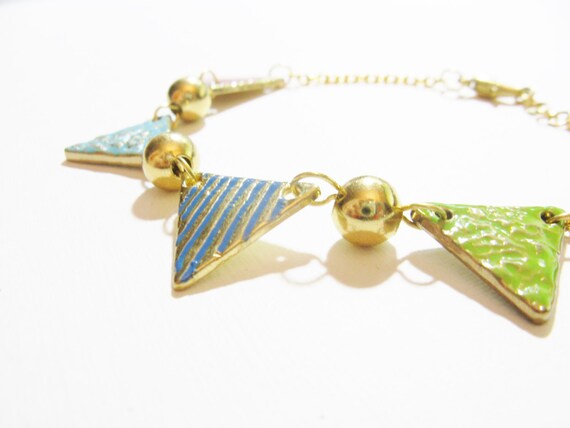
Triangular enamel bracelet neon green blue pink from Krysthle's Shop


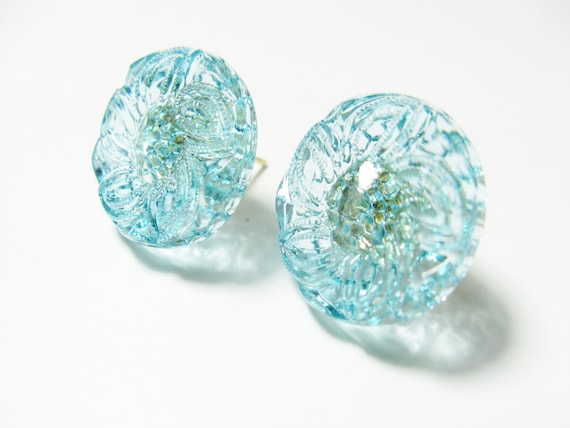
Turquoise Button Stud Earrings

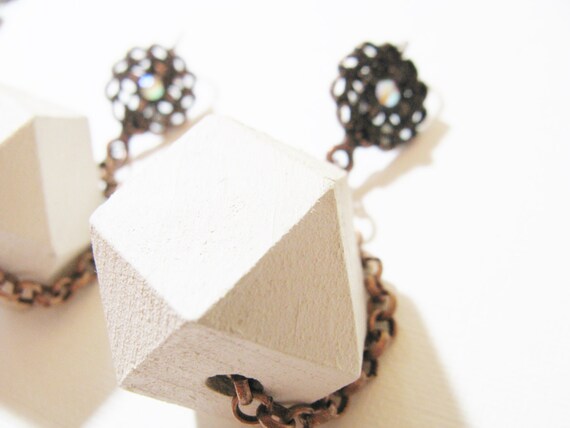
Geometric Wooden Vanilla Copper Earrings


Tuesday, June 11, 2013

Pearl is the Birthstone for June Birthdays

The word Pearl comes from the Latin word "pirum" (it means "pear" or the shape).  Pearls have are found inside the shell of an oyster, clam or mussel.


How are Pearls Made?
Cultured pearls are produced when man has introduced an irritant into the oyster or mussel and these are then harvested from their saltwater or freshwater environments. 


  • Pearls are formed because of a secretion of shelly substance around some irritating foreign particle
  • Natural Pearls are either saltwater found in gulfs, bays, seas and oceans or freshwater found in rivers and lakes
  • Kokichi Mikimoto was the Japanese man credited as the creator of the cultured pearl
  • Natural Pearls are found in the waters of these countries: Persian Gulf, the Gulf of Mannar, the South Pacific, the Gulf of California, the Gulf of Mexico, the Pacific coast of Mexico, Europe, Japan and Australia
  • Pearls come in a wide range of natural colors and shades. The type of oyster or mussel determines the color along with the geographical area

Colors: Natural (not dyed) colors are white, pink pearls, lilac, cream, grey, black and gold


  • Pink pearls are extremely popular
  • The Silver-lipped oyster is found in the South Sea around Australia which produces large white and silvery white South Sea pearls
  • Tahitian pearls range from black, light black/silvery and dark grey. The rare peacock green color is also referred to as a black pearl. The cheaper black pearls, especially freshwater, are usually dyed

  • Iridescence is the pearly lustre caused by the effect of colors which may be like those of the rainbow or a combination of colors such as pink, blue, green, and silver

  • Gold or golden pearls are the colors found in the South Sea

Types of Pearls:
  • South Sea pearls are famous for their gold colors

  • The Akoya Pearl is famous for their blue colors - from the Akoya oyster and are cultured seawater pearls produced in China and Japan. The Japanese Akoya pearl (cultured) have brilliant lustre and a higher quality than Chinese Akoya pearl
  • Persian Gulf Pearls, Oriental, are some of the finest natural pearls
  • Tahitian pearls are famous for their natural black colors
  • Mabe pearls are grown in Japan, Indonesia and Australia. Mabe pearls are cultured pearls grown against the inside shell of an oyster rather than within the oyster’s body producing a flat back pearl which are often used in earrings
  • The Mikimoto pearl are a leading brand. The company was founded by Kokichi Mikimoto who was the Japanese man credited as the creator of cultured pearls
  • Lake Biwa Pearls are freshwater pearls grown in Japan


Compiled by Linda Blatchford, Jewelry Designer 

Tuesday, June 4, 2013

The PFT Newbie Column – The Stumble Upon activity on Thursdays


Krysthle Poitras
Hi team,

I would like to introduce myself as one of the many newbies that recently joined the team. I am learning the ins and outs of all the activities, and I'm finding that it`s quite a steep learning curve. Being the adventurous self that I am, I have decided that I will try each activity at least once, even the ones I'm not knowledgeable about, so that I can report on the how-to`s for the other team members who dare not adventure into unknown territory! Lol

I figure this will be a good resource for all future members who also join the team and might feel a little overwhelmed by all the requirements.  Fear not, I am here to mess up and learn for you, so you don’t have to!

Okay, every Thursday is dedicated to the Stumble Upon activity.  If you don’t know what Stumble Upon is, it’s a platform for sharing and finding webpage’s based on your interests. You choose your interest categories and SU (StumbleUpon) will find webpages that have content matching those interests.  When you click on the Stumble button, SU will bring up a page that is of interest to you.

But how is this any good for your business? Well, when you add pages to SU, it inventories them in its large network of webpages for others to discover. You don’t know who might stumble upon your product page, but it redirects targeted traffic that has an interest in your kind of product.  Targeted traffic is much more likely to buy from you, because they are actually interested in your products compared to blindly promoting to people who may or may not be interested.

So how does this activity work? First you need to sign up and have an account. I won’t teach you how to this, as it’s pretty basic. Once you have an account, you are set to go! I recommend downloading the SU app to easily add pages.  Select the appropriate app depending on which internet browser you use. Click on the following link to download: http://www.stumbleupon.com/downloads

Let`s review some of the features you will be using. Your dashboard should be similar to this picture:


 The most important features are all on this home page.  To access the homepage, click on the arrow at the top right of your SU dashboard and choose profile in the scroll down menu. Note that another important feature is here, the Add Page feature.


The Add page feature lets you register a new page for the SU inventory of webpages. If you haven’t downloaded the SU bar as mentioned above, this is how you will want to add pages. 

In the team discussion threads, you might hear talk about adding a review, or reviewing a team member. This means the same thing as adding a page. If you have the SU bar, you can simply click on the SU button in your browser bar, and this will bring you to the Add Page feature. The picture below shows you what the icon looks like, on the top right. It might be elsewhere’s on your browser, but this is where I keep it.


If a page has already been added (or reviewed), it won’t bring you to the add page button. In that case, you can just click the thumbs up as seen on the top left hand side of the picture above. Now you have liked the page, and the Stumble part is done for this particular shop.

But what is it hasn't been added yet? Here is what you need to do. First find the thread with all the shops. It should similar to this:


As you can see, only one shop as signed up so far. You will want to call out no.2 in the thread in case someone else also wants to add themselves to the thread at the same time as you. If no one else is calling the spot, go ahead and add your info.  Add your shop name followed by the listing you would like promoted. Make sure you remove everything after the numbers so that a picture doesn't show up. Then, you will need to choose a topic/category for your listing. Look at the SU categories (What`s this page about section) to figure out which on best represents your listing. Then choose four tags that best describe your product.

The person who signs up after you is the one who does your review. And you are supposed to review the person that is on the list before you. In this case JQ Jewelry Designs. The reason for doing the review is that someone needs to add the listing into the SU inventory. To be fair, everyone does one review (the person before them). Once the page has been reviewed/added, you don’t need to start over each time. You can just click on the thumbs up button at the top of the page when you click on the Etsy listing.

Okay, so to do the review, you need to add the web address that JQ has provided (the listing).  JQ had also provided you with a category/topic and tags. Choose the category she has provided for you and type in the tags she has chosen.  In the Write a Comment section, you have two options. Either you can copy and paste the description from the listing page, or you can write a positive blurb about her product. It’s really up to you.  Once you have finished, just click on the Add This Page button and the hard work is over.


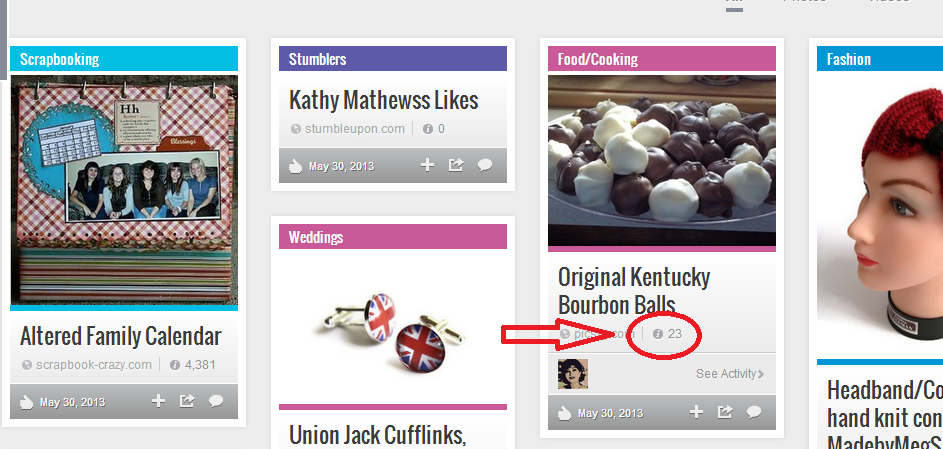
If SU is giving you trouble and won’t let you like pages, you can always piggy back off someone who was able to do it. Team members will often share their “likes page” for you. Follow the link they have provided and it should bring you to the team members reviews.  Find the listing you were looking for and click on the small letter ‘i’ (for info) in the box.


This should lead you to the “Stumblers Who Have Liked This” page. Click on the thumbs up at the top of the page, and you have accomplished your stumble.


Once you are finished doing this, all you need to do is share via other social media if you have chosen to do so. For example, if you provide a link for Pinterest, so that others pin your listing. You are expected to do the same with the team members that have also provided links to pin. Same applies to Twitter, Wanelo and other social media sites. And don’t forget to heart each item too on Etsy.

Hope you will now have the confidence to go and participate in the next Stumble Upon Activity on Thursday!

xox Krys


Tuesday, May 28, 2013

Developing Your Target Market (and a Challenge!)


How many of you spend more time than you'd like promoting your shop and your products?  

Most crafters and artists I know, myself included, would rather spend more time creating and less time promoting.  In my ideal world, I would just be able to make new pieces, and buy new tools, and shop for great supplies, and my product would just sell itself.  The reality is that if we don't promote our stuff, people won't see it.  And if people don't see it, they don't know it exists.  And if they don't know it exists...can you see where I'm gong with this?

I am always looking for better, more efficient ways to promote my work.  It's the reason I joined The PromotionalFrenzy Team in the first place, because promoting on my own wasn't getting me very far.  I've also been working lately to define (and refine) who I think my target and niche markets are.

Target and niche markets are really the cornerstone of efficient marketing.  If you don't know who you're selling to, or who's buying your stuff, you'll spend a lot of time promoting with very little return.  For example, if you send out a coupon code to 1,000 random Twitter followers, you might (stress on might) see a sale, maybe 2, and a little bump in traffic.  But if you send that same coupon code out to 100 targeted customers, people you know are looking for what you offer, your chance of sales goes way up.  Less work, more sales?  It sounds like magic, right?  So let's talk about how it works.

First, some definitions:

Target Market: A group of potential customers who have a common trait or characteristic.  For example, a bead supplier's target audience might be jewelry makers.

Niche Market: A more focused group within a target market.  For example, "jewelry makers who buy and sell on Etsy, ages 20-40, and live in the Southeast" is a much more defined sub-group of the target market referenced above.  Your niche market is made up of people similar to your ideal customer, which we'll talk about in a moment.

Off the top of your head, can you say who your niche market is right this moment?  If your anything like me, maybe you have a general idea somewhere in the back of your mind, but it's pretty vague and you probably couldn't put it down on paper, were you asked to.   This probably means that you're promoting everything to anyone who will listen, which is exhausting and time consuming, and not at all engaging.

Developing your target and niche markets changes that.  If you know that your target market is a group of women between the ages of 20 and 35 living in the Midwest and working from home, you can tailor your marketing efforts to target them.   

You can also tailor your products to suit them, addressing their specific needs.  Maybe your niche market is made up of stay at home mommies who need jewelry that is toddler proof.  Or maybe they have a lot of stress in their lives, and loves to burn scented candles in the evening while unwinding with a bottle of wine.  Once you get to know your ideal customer, everything you do can be addressed to them.

When you write your item descriptions, you can tell your niche market why your item is perfect for them and how it fits in their lives.  When you engage your niche market via social media, you can share things  that are relevant to them, and therefore interesting.  You can tailor your shop policies to cater to your niche market, you can use language that your niche market is comfortable with, you can run ad campaigns that catch their eye….the list goes on. 

So, how does one go about finding their target/niche market?  Etsy just recently published a blog post  with lots of helpful tips.  Included in their article was a link to a download-able worksheet that I think is a huge help in defining your ideal customer.  Up above, I mentioned that your niche market is made up of people similar to your ideal customer.  Your ideal customer is a fictional character with all the traits of your niche market, who is also your biggest fan.  Getting to know your ideal customer is a great way to personalize your target market, giving a face to that impersonal list of characteristics. 

I really encourage each of you to sit down with a pen and paper and fill out the worksheet.  Actually force yourself to write out answers, don't just think about it.  By actually writing something down, not only are your forcing yourself to develop a concrete idea of who your ideal customer and niche market might be, but you're also creating something to reference later as you continue to develop your brand.
I actually think filling out this worksheet is so important that I decided to create this blog challenge around it.  Follow the instructions below, and enter by June 11th, 2013 for a chance to win a special team blog feature! 

To enter:
  1. Visit and read the Etsy Blog post titled "How to Find your Target Market" [http://www.etsy.com/blog/en/2013/how-to-find-your-target-market/]
  1. Download the PDF worksheet [http://www.etsy.com/blog/en/files/2013/04/Define-Your-Ideal-Customer-Worksheet.pdf]
  1. Spend some time filling out the worksheet.  Use extra paper if you need it, and really get to know your ideal customer. 
  1. Leave a comment below answering the following four questions about your ideal customer:
    1. What is your ideal customer's favorite movie?
    2. List two (2) of your ideal customer's hobbies.
    3. What is one (1) need of your ideal customer?
    1. Briefly describe how your products meet that need. 

Once you've entered, I really encourage you to take your new found insight about your ideal customer and re-examine your marketing and promoting efforts, as well as your shop in general.  Are you reaching your target and niche markets?  If you're not, brainstorm some ideas on how you might better target them.  Don't be afraid to experiment with your marketing and promoting strategies.  Remember, it only takes one view to get a sale. 

Thanks for reading!  I can't wait to "meet" everyone's ideal customers.

Until next time,
Happy Sales!!

**Brought to you by Heather of Little Hill Jewelry**

Sunday, May 19, 2013

READY: Emerald Is the Birthstone for May

By: Linda B

Sources of Emerald
The proper name for the emerald is beryl, but there are different colors of beryl. Emerald green is the color as well as the stone. Most emeralds have inclusions (bubbles) in them. If the stone has too much blue in it, it is then an aquamarine. Pink beryl is morganite, yellow beryl is golden beryl, yellow-green beryl is heliodor. There is also a rare red beryl. The best beryl comes from Colombia and Brazil. Emerald can also be found in India, Australia, South Africa, Pakistan, and Zimbabwe. An emerald of the right shade of green can be more valuable than a diamond.


Emerald Gemstone meaning

The emerald is the sacred stone of the goddess Venus.  The emerald has long been the symbol of hope. It is considered by many to be the stone of prophecy. For some people, the emerald acts as a tranquilizer for a troubled mind. It is said that the emerald brings the wearer reason and wisdom. The strongest time for the powers of the emerald is said to be spring.


In several cultures, the emerald was the symbol for fertilizing rain. In the Christian faith it is the symbol of faith and hope.


Healing properties of Emerald
Emerald is used by healers to help heal the heart. The power of the Emerald is highest at the full moon.

Some cultures thought the emerald would heal any disease of the eye. The emerald would be placed in a container of water overnight and the water would be poured on the eyes the next day.

Knitted Football Fan Cozy


Emerald is a stone of great harmony, wisdom and love. Giving your lover an Emerald will bring the lover closer if the giver's motives are pure love. The Emerald can be a bridge between 2 people. The Emerald vibrates with love.

The sun sign Taurus is from April 21 - May 20 - Taurus takes its name from the Greek Tauros, meaning "the Bull."


No one is more persistence and steadfast than Taurus. Taurus usually excels at his work, because he understands the importance of method and order. Taurus has a wonderful sense of humor and often uses his humor to be the center of attention. Taurus is not aggressive, but can be stubborn and self-indulgence.

Taurus is loyal and faithful friend. As a lover, Taurus is sensual and amorous. Taurus is very fond of music.
Taurus says, "I have"


Celebrities born under the sign Taurus 
Catherine the Great
Ann Margret
Burt Bacharach
Candice Bergen
Carol Burnett
Cher
Albert Finney
Sigmund Freud
Queen Elizabeth II
Audrey Hepburn
Shirley MacLaine
Jack Nicholson
Al Pacino
Michelle Pfeiffer
Barbra Streisand
Orson Welles

Posted by Linda B, Jewelry Designer


Tuesday, May 7, 2013

Finding Motivation & Creativity


Art Wood Block Print Created by Lucius Art

Lately I have been finding myself losing motivation, or creativity.  Good ol' "writer's block".  I just can't seem to get inspired to work on my jewelry or shop, the energy just doesn't seem to be there.  I have heard several others express similar troubles lately so I thought maybe there are some tips to help us all get into Spring Fever!

I think as the weather turns warmer we all have a long list of things we want to do.  All of the sudden the warmer weather means, Spring cleaning, working on the yard, getting outside to enjoy the weather and more.  This means that our energy is being depleted with all of these other tasks and we run out of energy for things indoors such as creating jewelry.

TIP #1 - Set one goal and work on ONLY that one goal.  Get focused.  When trying to multi-task on cleaning windows, to washing all the drapes, prepping the yard/garden for Spring etc.  There is a tendency to never get a single thing completed.  It is best to work on ONE goal and once that is completed move onto another goal.

TIP #2 - Find Inspiration.  So now you set a goal of working on your craft for 1 hour, but you have no inspiration and don't know where to start!  I start surfing the internet to find current trends to see if a trend is inspiring to me.  If possible creating something that is trending would be most beneficial.  I also surf through sites like Pinterest.

TIP #3 - Share your Goals and Inspiration.  By sharing your goals you are holding yourself accountable, and also by talking about things it will help get you excited.  Excitement will help energize you!  So get talkin to PFT friends about your goals!

TIP #4 - Build Anticipation.  This may sound a little odd, but set those goals, find your inspiration, start creating some excitement by talking about it but do NOT start working on it right away.  Set a time a week or two down the line, so that you have time to really build yourself up.

TIP #5 - Keep your Goal Visible.  Write it down and post on your refrigerator, think about it each day, talk about it each day, keep the goals in the front of your mind so that you won't lose site of it.

TIP #6 - Enlist the Help of Others.  Sometimes going at something alone is too overwhelming.  Invite friends over for a creating party, or go to a friends house and try to get some support on your goals.

TIP #7 -  Start Small.  Just set small goals, so you don't get overwhelmed.  For jewelry it could just be to pick out a design, not actually creating the design.  Picking out color combinations, or materials would be a nice start.

TIP #8 - STAY POSITIVE.  This one is huge.  It is so easy to get into a funk about no views, or no sales, or that you haven't created in so many days.  But that is NOT helpful.  It only brings your mood down more and will kill what little motivation, energy and creativity you have.  Stay positive.  Focus on what you can do, what the possibilities are, and dream big!  Focus on the fact that there will ALWAYS be ups and downs, and so focus on the UPS.  The downs will never last.

I hope some of this can help everyone find their creativity.  We try to do some blog challenges to get people into a creative mood, and post about current trends to help everyone find inspiration... hopefully everyone will be feeling motivated soon.

Can't wait to hear of your goals and ideas, so that we can all get excited and motivated!!

Janet
Button Jewelry, Crystal Jewelry, Pearl Jewelry